

Welcome to A Capitol View!
Most of the federal government is (finally) back in business for the remainder of the fiscal year through September 30, after Congress and the White House approved 11 of the 12 annual appropriations bills, minus the Department of Homeland Security.
DHS is operating on temporary funding while Congress grapples with the future of Immigration and Customs and Enforcement (ICE). But deep partisan differences over the agency’s recent crackdown in Minneapolis and other cities likely won’t be bridged swiftly.
That means DHS and its various sub-agencies face new uncertainty and a likely shutdown. That includes Customs and Border Protection, the Federal Emergency Management Agency, the Transportation Security Administration, the Cybersecurity and Infrastructure Security Agency, the Secret Service, and the Coast Guard.
The latest: DHS shutdown all but certain after failed Senate vote
Plus: Here’s how a shutdown would affect DHS agencies
And find all the FY2026 appropriations bills here.
Full speed ahead: Meanwhile, SMI is already working with our clients to help shape appropriations for Fiscal Year 2027. That means engaging with federal agencies and congressional staff on how to advance a host of national technology goals in multiple research and industrial sectors.
Clouding the picture is the uncertainty surrounding when President Trump will release his budget blueprint for the fiscal year that begins October 1 – and in what form. By law, the president is supposed to deliver a budget plan by the first Monday in February.
“If you don’t budget, you can’t govern. Yet once again, the President’s budget is late – and there’s no explanation for the missed deadline,” complained Maya MacGuineas, president of the nonpartisan Committee for a Responsible Federal Budget.
We are hearing the administration is aiming for the end of March. The last time a president submitted a budget proposal on time was in 2015.
Getting closer? SMI is also advocating on behalf of small businesses and university clients to get the Small Business Innovation Research (SBIR) and Small Business Technology Transfer (STTR) rebooted after a more than four-month lapse.
Leaders of the Senate Committee on Small Business and Entrepreneurship are still working on a compromise on proposed reforms that would gain enough bipartisan support in both chambers to reauthorize the programs.
The pressure is only growing from some of the nation’s largest industry groupsand more startups and traditional firms alike say they are feeling the squeeze. Anda fresh congressionally mandated study from the National Academies of Sciences highlighted the success of the programs in supporting national defense and why some of the changes under consideration could undermine America’s technological edge.
Keep up with the latest from DefendSBIR, a coalition of small businesses and universities that SMI is supporting.
SMI SPOTLIGHT
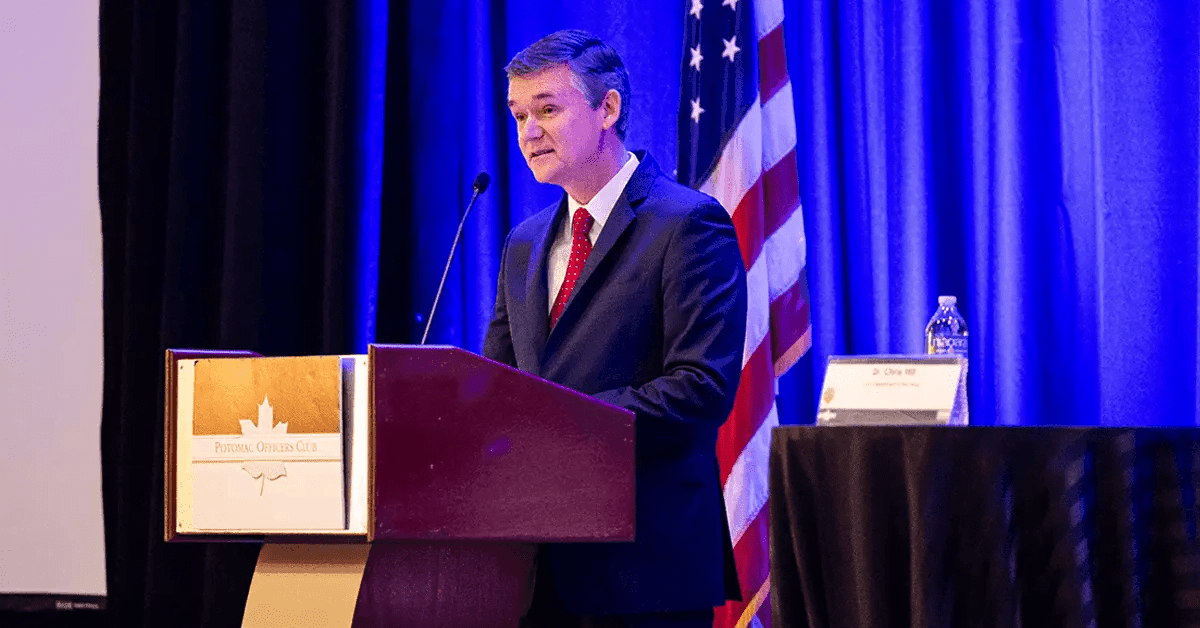 BRAIN TRUST: As we continue to deepen our bench of government acquisition and technology leaders, SMI is thrilled to add to our roster of senior advisors Doug Bush, the former Assistant Secretary of the Army and a longtime House Armed Services Committee staffer.
Bush also held staff positions for Sen. Bill Nelson of Florida and Reps. Jim Cooper of Tennessee and Neil Abercrombie of Hawaii. He is the founder and president of DRB Strategies, a consulting firm specializing in government acquisition, contracting, and legislative strategies for companies focused on national security. He is also a Non-Resident Senior Advisor with the Center for Strategic and International Studies (CSIS).
Bush is a graduate of the United States Military Academy at West Point and also holds a master’s degree in National Security from Georgetown University.
SMI in the news: Ukraine’s future may turn on upcoming votes in Congress
DEFENSE
 ON HOLIDAY: SMI is dedicated to fostering new linkages between government agencies, the private sector, and academia to collaborate more effectively.
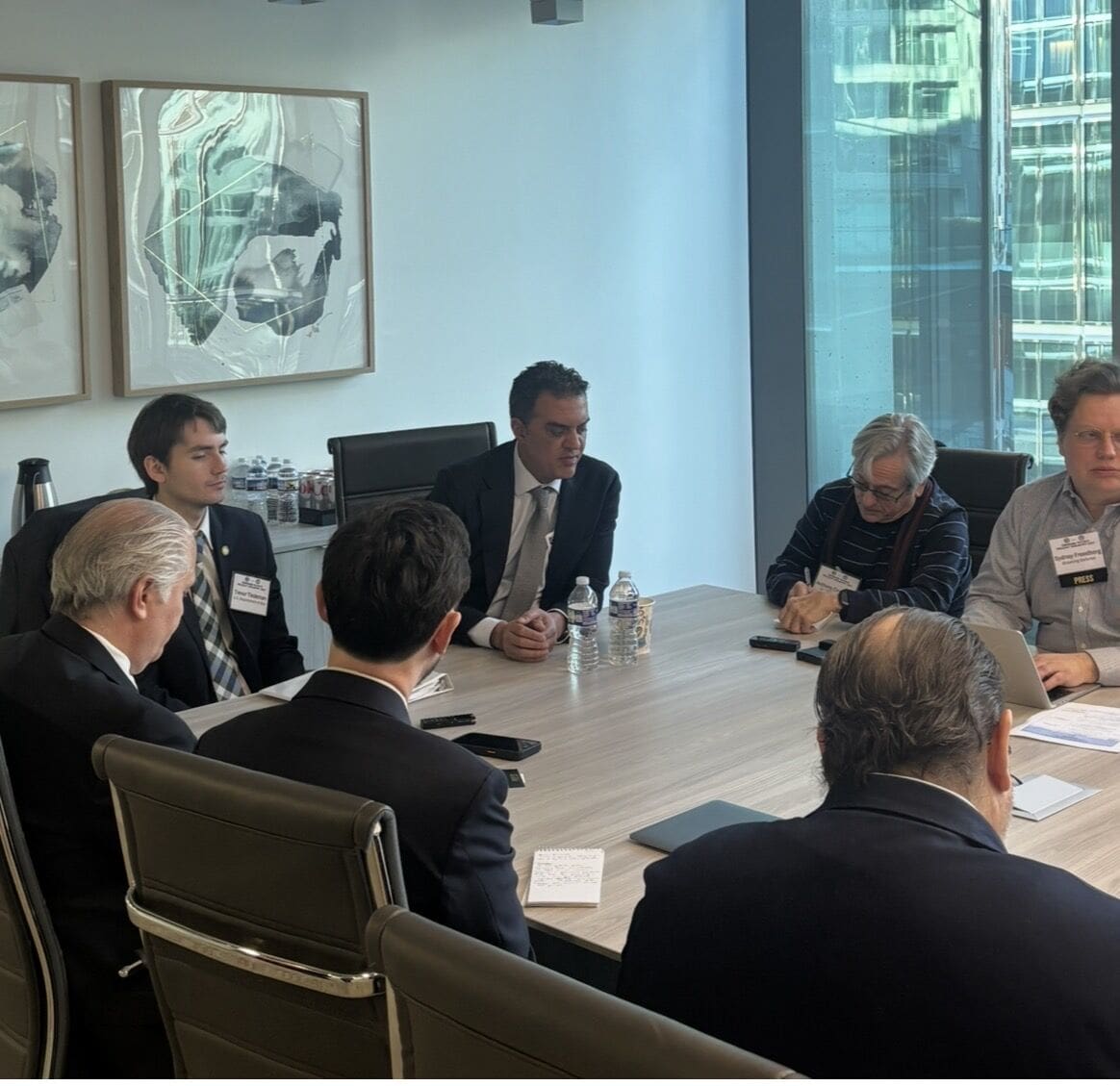
We were honored to host the Department of War’s recent “Patent Holiday” rollout, in which hundreds of promising patents from military laboratories are being made available at no cost to see if they can be scaled up, brought to market, and turned into real-world capabilities.
The aim is “to take some of that brilliant work that’s been done and really use private industry as partners to bring that work forward for the warfighter,” Undersecretary of War for Research and Engineering Emil Michael, the department’s Chief Technology Officer, told hundreds of attendees in SMI’s conference center during the event organized by SMI COO Ken Wetzel..
SMI VP Bryan Bender also hosted a media roundtable on the new initiative with Secretary Michael and other top defense officials, which drew Axios, Defense Daily, Defense & Aerospace Report, Air & Space Forces Magazine, War on the Rocks, The Wall Street Journal, Bloomberg News, Aerospace America, and Breaking Defense.
Read the initial list of patents here.
Plus: Pentagon CTO offers industry free use of 400 patents from gov’t labs — for a start
And: Air Force Patent Holiday Offers Businesses Inventions For Free
What’s next: DoD expects AI-powered database of patents ready for industry by year’s end
In related developments, the department also released a new directive on Transforming the Defense Innovation Ecosystem to Accelerate Warfighting Advantage and named senior officials to oversee its pared down Six Critical Technology Areas.
 THE ARSENAL OF DEMOCRACY: SMI was also on the road in Michigan to help organize a meeting of congressional staff, the Army Contracting Command, and defense industry leaders who are collaborating on a series of new initiatives to build upon the state’s deep legacy of defense manufacturing.
Other key participants at the congressional breakfast hosted by SME included reps from the Detroit Regional Defense Coalition, Space Force Association, Air & Space Forces Association, National Defense Industrial Association, the National Guard Association of Michigan, and the Michigan Office of Defense and Aerospace Innovation (ODAI)
‘Attractive place’: SMI is proud to be supporting ODAI as it works to reimagine and revitalize Michigan’s legacy of leadership in defense innovation and manufacturing. Those efforts are steadily paying off.
The Department of War announced this month that the National All-Domain Warfighting Center at the Camp Grayling Joint Maneuver Training Center in northern Michigan has been designated a national drone testing site. The development makes the “an even more attractive place for cutting-edge defense and aerospace companies to invest in, create good-paying, high-skill local jobs, and grow our economy,” said Governor Gretchen Whitmer.
The announcement also came on the heels of the news that the Pentagon has identified 25 companies to compete in the first phase of the Drone Dominance Program, an acquisition reform effort designed to rapidly field low-cost attack drones at scale – including Swarm Defense, the Michigan drone startup, and AnnoAI, a key partner in the Lake Superior Test Range.
Plus: War Department Announces Vendors Invited to Compete in Phase I of the Drone Dominance Program
More defense news: Trump orders prioritizing countries with higher defense spending as customers for US weapons
And: Trump administration’s defense strategy tells allies to handle their own security
Plus: Raytheon to ramp up missile production in Pentagon deals
HEALTH
 ‘ACCESSIBILITY GAPS’: The University of Massachusetts Lowell’sCenter for Biomedical and Health Research in Data Sciences, an SMI client, is carrying out pioneering research on food insecurity in America.
In a landmark study recently published in Nature Magazine, researchers identified how geographic disparities and demographic variables exclude many in need of nutritional assistance from food pantries and federal programs such as the Supplemental Nutrition Assistance Program (SNAP), Women, Infants, and Children (WIC), and The Emergency Food Assistance Program (TEFAP).
‘Inform public policy’: “States with clear accessibility gaps, such as West Virginia and Alaska, may require targeted investment in [food pantry] development through approaches such as public-private partnerships, mobile pantry programs, or integration with existing rural service delivery networks,” they found. “Allocation of federal resources through programs such as TEFAP, as well as foundation funding priorities, should consider both food insecurity prevalence and accessibility when targeting support.”
The research was made possible by a grant in 2022 from the National Institutes of Health and the support of Reps. Lori Trahan and Jim McGovern, who contended it would “inform public policy and public services to help strengthen food programs and pantries as effective tools for community-level food insecurity and well-being.”
Related: U.S. News & World Report Gives High Marks to UMass Lowell’s Online Programs
ENERGY
 CERTAINTY FOR MANUFACTURERS’: SMI supports the BATT Coalition, an industry group dedicated to increasing domestic production of raw materials and components for electric batteries.
A major objective is helping build momentum for legislation to enhance tax incentives for producing battery components in the United States and phase out federal support for battery makers that continue to rely on critical minerals from adversarial nations.
Bipartisan bill: The bipartisan Critical Minerals and Manufacturing Support Act 2.0, co-sponsored by Reps. Gabe Evans (R-CO) and Raul Ruiz (D-CA), would increase from 10 percent to 25 percent the Section 45X Advanced Manufacturing Production Credit for the cost of processing electrode active precursor materials and electrode active materials.
The bill would also strengthen sourcing requirements for battery components to reduce reliance on Chinese and other foreign sources and spur development of the robust domestic supply chains that are now a national imperative.
“America should never be dependent on foreign adversaries for the materials that power our vehicles, our grid, or our national security,” said Evans, a member of the Energy and Commerce Committee. “This bill creates certainty for manufacturers, supports American workers, and puts our nation’s economic and energy security first.”
‘A powerful mix’: “This new legislation provides a powerful mix of incentives to reverse the overwhelming market disadvantages that U.S. companies still face,” added BATT Executive Director and SMI VP Samm Gillard. “It will encourage American ingenuity and private investment, strengthen our economic competitiveness, and safeguard our national security.”
BATT in the news: Gillard also spoke to Brett Fortnam, editor-in-chief of Inside Washington Publishers’ Inside U.S. Trade about the Trump Administration’s recent decision to pursue critical minerals agreements.
He advocated for considering “security-based alliances” with allied nations such as Australia, Canada, New Zealand, and the United Kingdom. He also proposed a “mineral-by-mineral” strategy focused on a group of countries rather than a country-specific approach.
Related: Energy Department Announces Realignment of Critical Minerals and Energy Innovation Programs
Opportunity knocks: Domestically Sourced Rare Earth Magnets
CLIENTS IN THE NEWS
Following a recent order, Army orders more Oshkosh FMTV A2 LVADs
Creare Acquires Brayton Energy to Advance Sustainable Energy
Scientific Systems CEO on the future of warfare and scalable autonomy
With the boom for solid rocket motors for missiles, a perilous crunch in the supply chain
READING ROOM
Trump’s EPA is revoking the “endangerment finding” on greenhouse gases. Here’s what to know.
Universities are sending Trump a dangerous message
Congress Is Rejecting Trump’s Steep Budget Cuts to Science
The national security startup boom is real — and complicated
Trump’s Trade Policies Sort Manufacturers Into Winners and Losers
Please follow us on social media to keep up to date on our latest activity.