

Welcome to A Capitol View!
We are in the throes of budget season, and SMI is engaged across executive branch agencies and Capitol Hill as deliberations pick up over the investment priorities for the coming fiscal year.
Our team of lobbyists and consultants have also been on the road helping clients prepare their federal strategies, elevate their ideas and solutions with government, industry, and academic partners, and drive the conversations in Washington and beyond that are critical to turning concepts into capabilities.
We also continue to grow our team of subject matter experts as we sharpen our technology and policy expertise in defense, energy, life sciences, and more
SMI SPOTLIGHT
 RISING TIDE: SMI is thrilled to welcome to its roster of senior advisors retired Navy Rear Adm.Terence “Terry” McKnight.
A leading expert in global maritime capabilities and strategy, Admiral McKnight commanded the Naval District Washington, several amphibious warfare ships, and oversaw counter-piracy operations in the Middle East and Horn of Africa during his highly decorated three-decade naval career. He is the author of Pirate Alley: Commanding Task Force 151 Off Somalia.
He also joins SMI with deep industry experience, including as senior vice president for government relations at CAES, formerly Cobham Advanced Electronic Solutions.
Admiral McKnight is a graduate of the Virginia Military Institute and the U.S. Army War College and serves on the VMI Board of Visitors and the Virginia Defense Advisory Board.
STANDING OUT: SMI was honored to be recognized as one of Washington’s top lobby firms in the latest annual rankings by Bloomberg Government. SMI also qualified as a “standout” firm due to several growth factors and high client retention rates.
Top tier: SMI VP Bryan Maxwell was also included in Punchbowl News’ top defense lobbyists to watch. “Maxwell has more than a decade of Hill experience,” the Capitol Hill publication noted. “That includes a lengthy stint as an aide for Sen. Jeanne Shaheen (D-N.H.), a senior member of the Armed Services and Foreign Relations committees. Maxwell now represents clients like Huntsman Corp. and GE Aerospace.”
Maxwell said he’s “looking forward to the FY27 defense policy and funding debates taking shape.”
BUDGET
 AIMING HIGH: President Trump released his proposed $2.2 trillion budget plan for Fiscal Year 2027. As expected, it doubles down on defense spending and the development of critical minerals, while further gutting what it calls the “Green Energy Scam” and slashing numerous federal agencies and social programs.
The proposal supersizes the Pentagon budget to $1.5 trillion, marking a nearly 50 percent spike. A major pot of money would go to the Industrial Base Analysis and Sustainment (IBAS) and Defense Production Act (DPA) programs – more than $40 billion and $30 billion, respectively. That marks the single largest proposed increase and demonstrates a continued priority for the U.S. industrial base and domestic production capabilities.
Criticality: The current administration has also heavily prioritized critical mineral production and related supply chains, including more than $18 billion in the Pentagon budget to stockpile minerals like cobalt, graphite, and other raw materials.
The plan also calls for a major expansion of the Missile Defense Agency’s budget to $18 billion, nearly double what it projected for next year. And the defense spending plan sets aside $17.5 billion to pursue the Golden Dome missile defense system and $5 billion for the Air Force’s Next Generation Air Dominance aircraft, or F-47, up from $3.5 billion this year.
For the Department of Energy, the White House is seeking a 10 percent increase to $53.9 billion, mostly for the National Nuclear Security Administration (NNSA), which develops nuclear weapons. But it cuts $15.2 billion in spending from the Biden-era bipartisan infrastructure law and seeks to slash the Environmental Protection Agency’s budget in half.
What’s next: The White House spending plan for Congress will likely come in a combination of three forms – the annual budget, a supplemental spending package to replenish munitions used in the Iran War, and a reconciliation package, the expedited legislative process allowing bills to pass the Senate with a simple majority, and thus along party lines if needed.
But we expect it to face many hurdles, including pushback from fiscal hawks in the GOP who are resistant to such historic defense increases, and opposition from Democrats, who immediately blasted the blueprint for its steep cuts in non-defense spending.
Check out the upcoming schedule for congressional budget hearings.
The House, meanwhile, is planning to mark up all appropriations bills by June, according to Appropriations Committee Chair Rep. Tom Cole.
Watch: White House Budget Director Vought Testifies on President Trump’s FY2027 Request
Read up: Budget of the U.S. Government
Plus: Rebuilding our Military
More budget news: Senate Republican calls proposed NASA budget cuts a ‘mistake’
And Trump’s $1.5T DOD budget proposal calls for more munitions production
DEFENSE
 ‘SUSTAINED FOCUS’: SMI was out in force at the Defense Manufacturing Conference (DMC) in Orlando, the premier annual forum for engineers, program managers, technology leaders, scientists, and policymakers across the national defense manufacturing base.
SMI COO Ken Wetzel chaired a technical session on metals, and SMI hosted an evening reception convening leaders from across the defense manufacturing ecosystem, including representatives from the Department of War, prime contractors, small businesses, national laboratories, and academia.
The reception provided an opportunity to reconnect with longstanding partners while also engaging new stakeholders entering the space.
“It was a privilege to once again engage with leaders across the defense manufacturing community,” Wetzel said. “The sustained focus, commitment, and dedication demonstrated year after year underscore a shared resolve to address the most pressing challenges confronting the defense industrial base.”
Takeaways: Dr. Haynes reported from DMC that “discussions highlighted the growing importance of artificial intelligence in manufacturing, resilient and adaptable materials, and strengthening domestic supply chains, particularly around feedstock production and critical minerals.”
Other major topics included workforce retention, scaling technologies through the “valley of death,” and overcoming barriers related to IP and standardization. “There was strong interest in improving coordination across agencies, enhancing dual-use commercialization pathways, and ensuring that federal investments translate more effectively into industrial-scale manufacturing and national security outcomes,” she added.
POWERING UP: SMI is proud to support GE Aerospace as it invests an additional $1 billion in its U.S. operations this year, including upgrading defense and commercial engine production facilities in multiple states, including Massachusetts.
“Here in Massachusetts, we have the tools, science, and talent to help safeguard the nation,” Massachusetts Lieutenant Governor Kim Driscoll said after touring GE’s Lynn facility this month, where the company is directing $42 million. “We have the innovative and coordinated ecosystem to ensure we’re protecting our servicemen and women, while also creating a lot of great jobs in our state.”
Overall, the nationwide investment “will benefit sites across more than 30 communities in 17 states,” the company announced recently. “GE Aerospace also plans to hire 5,000 U.S. workers, including both manufacturing and engineering roles, in addition to the 5,000 people it hired last year.”
Plus: GE Aerospace to Invest Another $1B in U.S. Manufacturing
GROWTH AREAS: Big things are happening in the Michigan defense industry, and SMI is pleased to be supporting one of the nation’s most forward leading public-private partnerships to rebuild the defense industrial base.
John T. Gutierrez, executive director of the Michigan Office of Defense and Aerospace Innovation (ODAI), recently appeared on the Defense & Aerospace Report podcast to discuss the recently released Michigan Defense and Aerospace Strategic Plan.
Major focus areas include “expanding Michigan’s maritime footprint,” Gutierrez said, noting that the Navy “is challenged right now to keep up with throughput for suppliers for shipbuilding and submarines.” Michigan is “focused on preparing the skilled workforce to meet many of those unique requirements” and helping suppliers to support the nation’s major shipbuilders, he added.
He also spoke about the state’s “burgeoning space industry,” noting that “we are looking at expanding that and providing an ecosystem for companies that are already here to thrive here or those companies that are coming here to be able to plug in and establish their business and grow and succeed.”
More ODAI news: University’s AI Model Could Help Coast Guard Avoid Arctic Ice
Plus: Can Michigan Become the U.S. Drone Capital?
ENERGY
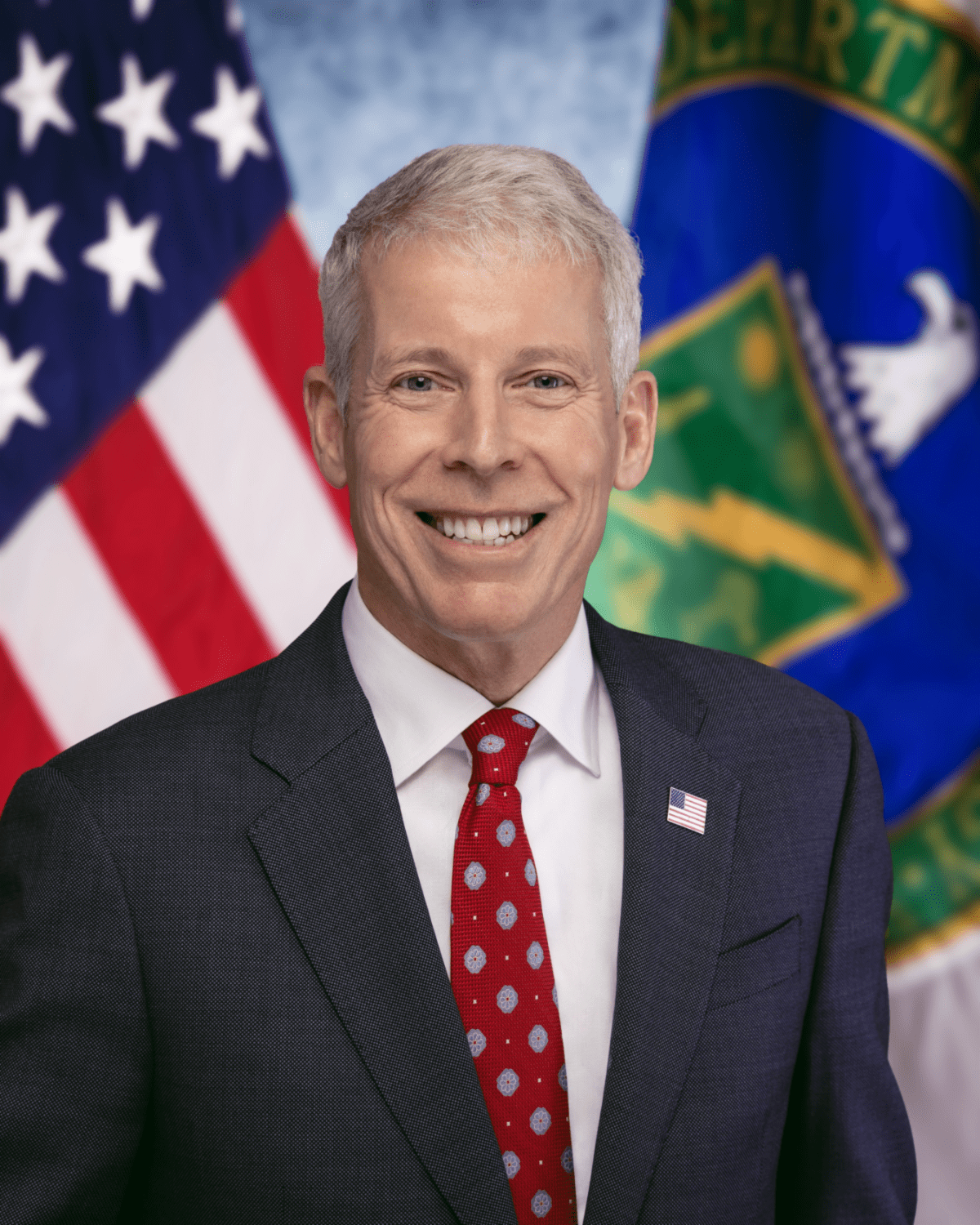 STAYING THE COURSE, MOSTLY: Energy Secretary Chris Wright told Congress that the Energy Department has concluded its review of Biden-era clean energy projects.
“We have finished that effort, and we are keen to move forward with the majority of projects, which did pass [review], either straight up or through restructuring,” Wright said. “And on we go.”
Learn more about the status of some 2,000 projects that were reviewed.
More energy news: DOE’s FY27 Budget Request: The Good, the Bad, and the Ugly
INFLUENCE OPERATIONS: SMI continues to support the growing membership of the Battery Advocacy for Technology Transition (BATT) Coalition.
The advocacy group recently provided official comments to the Department of the Treasury and Office of the United States Trade Representative on implementation of tax credits and trade policy to help further incentivize a domestic supply chain for battery components.
“The U.S. government and the private sector have made significant strides to build a more sustainable domestic industrial base for battery materials and components,” SMI VP Samm Gillard, who serves as the coalition’s executive director. “We now have opportunities to supercharge those investments with more robust policies. But how we implement them will determine whether domestic producers double down on their commitments, and we can truly break China’s lock on this strategic industrial sector.”
Go deeper: BATT Proposes Implementation Guidance on New Tax, Trade Measures
BATT in the news: Battery, minerals producers eye reconciliation bill to shield tax credits
STRATEGIC COMMUNICATIONS
DIGGING IN: SMI helped organize a high-level dinner and discussion on the sidelines of SME’s annual rapid + tct in Boston, North America’s largest additive manufacturing and industrial 3D printing event.
The discussion focused on the partnerships required to narrow the gap between technology and talent in the manufacturing sector, as well as Governor Maura Healey’s new initiative focused on investing in the region’s defense sector and workforce.
Special thanks to reps from the governor’s office, Massachusetts Technology Collaborative, MassMEP, University of Massachusetts Lowell, Raytheon, GE Aerospace, Physical Sciences Inc., Novamet, Humatics, New Balance, ToolingU, and Donovan Strategies for contributing their unique insights to the discussion.
CLIENTS IN THE NEWS
ROC completes NASDAQ IPO, positioning Vision Ai platform for scaled deployment
PSI applauds renewal of the SBIR and STTR Programs
Alia Drescher Named to Siemens Government Technologies Board of Directors
Please follow us on social media to keep up to date on our latest activity.