


Welcome to the November edition of A Capitol View!
The federal government is back up and running after the longest shutdown in history. But it will take some time for halted projects to get back on track, and Congress and the White House will need to come together quickly to avoid grinding to a halt again.
Republicans and enough Democrats reached a deal to reopen the government after 43 days, funding some government programs for the new fiscal year and the majority only through January.
The “minibus” appropriations package funded the Department of Agriculture and the Food and Drug Administration, the Department of Veterans Affairs, military construction projects, and the operations of Congress for a full year. Other federal operations and agencies were funded through Jan. 30.
The agreement also guaranteed that federal employees laid off during the shutdown are rehired and get back pay.
‘Some encouragement’: There is cause for hope that Congress will keep the momentum going and pass additional appropriations bills before another continuing resolution to avoid another partial shutdown early next year.
“The inclusion of three of the twelve annual appropriations bills in the November deal to reopen the government should give some encouragement that members of Congress are incentivized to keep the appropriations process moving,” according to SMI Director Nick Vance, a former House Defense Appropriations Subcommittee staffer.
What to watch for: “The key indicators to watch in the short term,” Vance added, “are whether there can be bipartisan agreement on topline spending levels, how the
Trump Administration does or does not advocate for completion of the FY26 bills, and if House and Senate leadership have the appetite to work through the political landmines on immigration, further government layoffs, and the Administration’s proposed cuts to research funding – all of which impact multiple appropriations bills.”
What’s needed: Both the White House and Congressional leadership will need to craft guidance quickly for the House and Senate to marry their different versions of remaining appropriations bills. “Without agreement on numbers and a framework for policy riders,” Vance explained, “Congress risks slow walking into another full year CR.”
Hopes were high in the days following the shutdown that Congress would move swiftly to get an annual defense appropriations bill passed, possibly as part of a package including spending for homeland security. But we don’t expect significant movement until at least after the Thanksgiving holiday.
Read more: Major spending package planned for Senate floor faces doubts
Go deeper: After the Shutdown: What Comes Next for the Pentagon’s FY26 Budget?
Plus: Examining House-Senate Differences in FY2026 Defense Appropriations
GETTING CLOSE: Meanwhile, the National Defense Authorization Act, which sets policy, is moving forward, and we expect the text of a final bill from House and Senate negotiators to hit the street in early December.
“We’re pretty much wrapped up. All the big decisions are made,” House Armed Services Chair Rep. Mike Rogers told POLITICO.
NOT BUSINESS AS USUAL: But the Small Business Innovation Research (SBIR) and Small Business Technology Transfer (STTR) programs remain mostly on ice after expiring on September 30.
Negotiations continue between the chairs and ranking members of the House and Senate Small Business and Science Committees over how to reform the small business seed fund utilized by nearly a dozen federal agencies.
SMI continues to work with affected clients and advocate for a reauthorization bill that advances the widely supported program without harming some of the most innovative companies that the government has repeatedly relied on to solve difficult national security, public health, and technology challenges.
Read up: Reauthorize SBIR/STTR Now
And: Federal SBIR program remains in the lurch amid showdown between Markey and Ernst
Plus: SBIR Contracts, On Hold During Shutdown, Face Long-Term Risk
SMI SPOTLIGHT
 ANALYZE THIS: SMI’s lobbying and consulting teams depend on our first-in-class roster of analysts for research and a host of other critical support tasks. We are thrilled to welcome Eleanor Frist. to the team.
Frist studied public policy and French at the University of Virginia, where she focused on the rising national security threat of China and how the Russian naval industry’s capacity for modernization stacks up to the American shipbuilding base.
She was also an intern at Mehlman Consulting, where she supported multiple research initiatives and helped prepare for congressional hearings.
As SMI’s newest analyst, she will be supporting some of the firm’s most seasoned lobbyists, including Senior VP Jeremy Steslicki and VP John Major.
She serves on the board of Wartime Fitness Warriors, a nonprofit organization dedicated to helping youth through fitness and community engagement.
DEFENSE
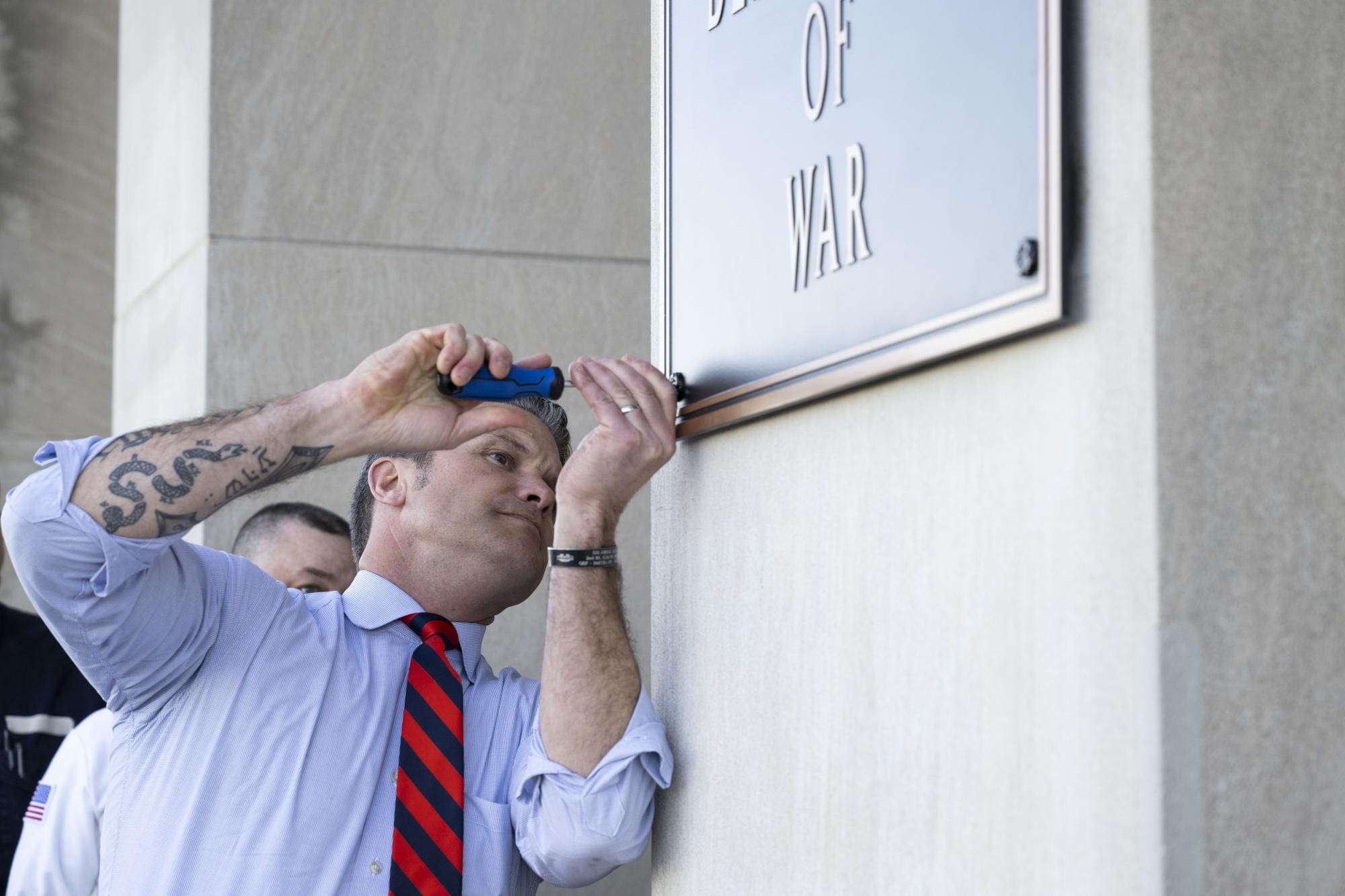
‘ACCELERATING CAPABILITY’: If you have defense contracts or support companies that do, real change is afoot in how the Pentagon acquires new technologies and weapon systems.
Secretary of War Pete Hegseth this month issued a new set of directives that he said are intended to “aggressively prioritize the timely and urgent delivery of operational capabilities to the Warfighter.”
What’s in a name? He formally renamed the Defense Acquisition System the Warfighter Acquisition System (WAS), but the changes he set in motion are far more than cosmetic.
The core principles, as Hegseth laid them out in a memo, are to “instill the warrior ethos in the acquisition workforce and enterprise, inject a sense of urgency and relentless focus on speed by empowering those directly responsible for delivery to make and own decisions, cut through unnecessary layers to focus the WAS on speed, accountability, and mission outcomes, and prioritize flexible requirements and resource trades to enable timely delivery at the speed of relevance.”
Hegseth added: “We will award companies bigger, longer contracts for proven systems, so those companies will be confident in investing more to grow the industrial base that supplies our weapon systems more and faster.”
‘Backwards culture’: But he also took a swipe at the defense industry, which he said, “financially benefits from our backwards culture.”
“These large defense primes need to change,” he added, “to focus on speed and volume and divest their own capital to get there.” But he stressed that the Pentagon remains “big time supportive of profits.”
“We are capitalists, after all,” he said. “I’m not here to punish. I’m here to liberate.”
Related: Pentagon keen to recruit fresh acquisition workforce talent as it jumpstarts procurement reforms
Plus: The Army is changing its acquisition structure. Here are the details.
Go deeper: Acquisition Transformation: How to Make it Last
But not so fast: Speed not a mandate for Pentagon acquisition overhaul, says top weapons buyer
MANUFACTURING
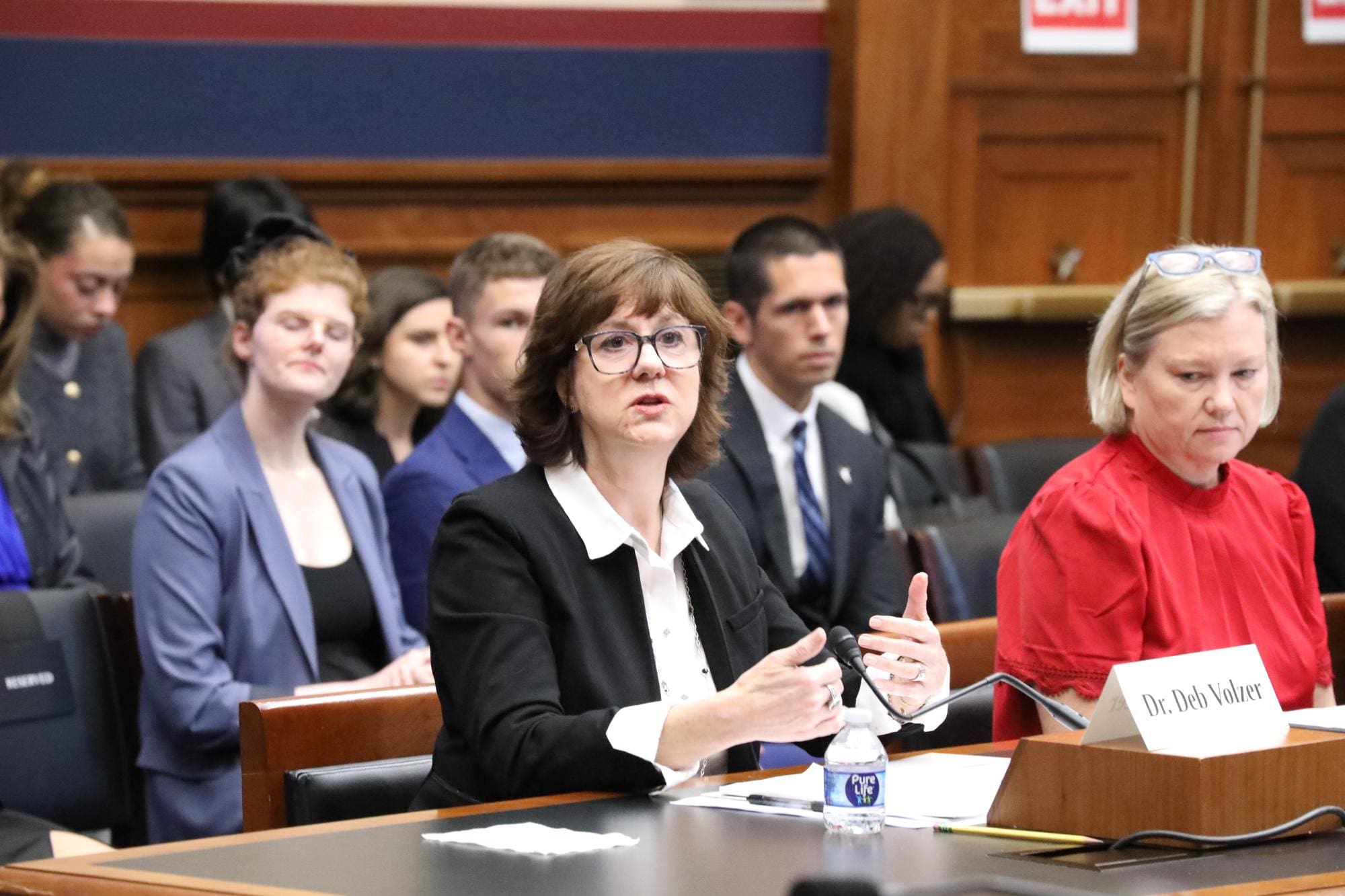 ‘BOLD, COORDINATED ACTION’: SMI is proud to support some of the nation’s most ambitious workforce development initiatives, helping government, industry, and academia to execute programs that are critical to training and nurturing the next generation of skilled workers and tradespeople.
Leading many of those efforts is SME, the century-old Society of Manufacturing Engineers, which is empowering government at all levels, thousands of businesses large and small, and educational institutions to “drive real, lasting change,” Dr. Deb Volzer, VP of Workforce Development, told the House Education and Workforce Committee Subcommittee on Early Childhood, Elementary, and Secondary Education on November 19.
‘A critical crossroads’: “America’s manufacturing workforce is at a critical crossroads,” Volzer testified. “The talent pipeline is shrinking, the skills gap is widening, and we need more young people stepping into manufacturing careers that both fulfill their ambitions and also provide the United States with the thriving workforce needed to remain the dominant economic world leader we have always been. This is not a distant challenge. It is a crisis unfolding right now – today.”
Volzer called for more “bold, coordinated action,” beginning with updated education models “to align with skills that secure sustainable, thriving, waged occupations,” she told the panel. “Building a well-rounded individual is absolutely critical when we talk about workforce-ready skills,” including “critical thinking and problem-solving.”
‘TRANSFORMATIONAL’: SMI client Triton Systems has opened a new state-of-the-art manufacturing facility in Massachusetts dedicated to using cold spray technology to manufacture high-performance components for defense and aerospace applications.
“With our new cold spray systems, Triton is delivering transformational domestic production capabilities for U.S. maritime and defense needs,” said Dr. Bryer Sousa, Triton’s Cold Spray Team Leader. “Examples range from fabrication of large structural replacements for submarines and surface ships, to restoring worn parts on site.”
“These advanced manufacturing methods,” she added, “will strengthen resilient supply chains and reduce lead times, directly aligning with the Pentagon’s focus on domestic shipbuilding, sustainment readiness, and industrial base resilience.”
SMI worked with Congress to secure support for the expansion. “The possibilities of this facility are endless, whether it’s enabling the production of large-scale high-performance metallic components, or creating hands-on training in this facility for the next generation of skilled manufacturing professionals,” said Rep. Lori Trahan. “This new facility is critical to supporting the United States defense and aerospace sectors and solidifying the Commonwealth as a regional home for the American defense supply chain.”
Read more: Triton Systems Opens State-of-the-Art Cold Spray Additive Manufacturing Facility
TECHNOLOGY
 THE FINE PRINT: SMI, which has a robust practice focused on helping foster innovation in the microelectronics industry, is navigating some new opportunities – and markedly different agency requirements – on behalf of our private sector and academic clients.
The National Institute of Standards and Technology at the Department of Commerce recently published a Broad Agency Announcement seeking “research, prototyping, and commercial solutions that advance microelectronics technology” and plans to make multiple awards of at least $10 million.
Proposals, which will be reviewed by the CHIPS Research and Development Office (CRDO), should prioritize ways to “accelerate the pace of commercialization” in advanced microelectronics research and development by leveraging new technologies and production processes such as AI, quantum computing, biotechnology, and manufacturing.
What’s the ROI? But the agency also appears to be following the Trump Administration’s recent practice of seeking a government share in future profits, departing from the longtime practice to forgo any ownership stake in patents that emanate from federal funding. Most recently, the Trump administration took a stake in a rare-earth minerals startup.
In a section titled “return on investment,” the NIST announcement states that “as a condition of receiving an award, applicants may be required to issue to the Department equity, warrants, licenses to intellectual property, royalties or revenue sharing, or other such instruments as may be required to ensure a return on investment to the Government.”
Go deeper: Note to Lutnick: Bayh-Dole is a winner for taxpayers
ENERGY
 LEADING THE WAY: The Office of Naval Research extended its partnership with SMI client University of Massachusetts Lowell and Stony Brook University to increase energy resilience across naval installations and operations.
ONR has awarded the schools a $6.3 million grant to research more reliability and accessibility of energy systems on both land and at sea to withstand natural disasters, cyberthreats, or disruptions to fuel supplies.
‘Drive progress’: Researchers are focusing on a dozen projects covering improved power grid management, structural health monitoring of energy infrastructure, energy storage and materials, and fuels and power systems.
“Working alongside the U.S. Navy, Stony Brook University and our industry partners, our researchers are developing innovations that not only support the nation’s defense but also drive progress in energy resilience and sustainability,” said UMass Lowell Chancellor Julie Chen.
SMI worked with lawmakers who championed the grant. “Our military’s energy grid is only as strong as the investments we make in it,” said Sen. Elizabeth Warren (D-MA). “I fought hard to secure this funding, and it’s great to see Massachusetts universities continuing to lead the way in research and the path to energy independence.”
Other partners include National Grid, PSEG Long Island, and the Long Island Power Authority.
Read the announcement: UMass Lowell, Stony Brook Awarded $6.3M Grant to Enhance US Navy’s Energy Resilience
More energy news: A Trump Overhaul of the Energy Dept. Breaks Up Clean Energy Offices
SIMPLIFYING THE COMPLEX: Congrats to SMI client Xerion Advanced Battery Corp. for its DirectPlate technology being named one of the best inventions of 2025 by TIME.
The technology “uses electricity and molten salt to extract pure cobalt directly from raw materials in a single step, simplifying the complex—and far more expensive—process employed overseas,” the magazine reports.
For too long the United States has relied on China for cobalt, which, as Time reports, is “an essential element in EV batteries, fighter jet engines, and other critical technology.”
‘Core technology’: Xerion describes DirectPlate as “our core technology” and “a fundamental breakthrough for the most important modern industrial processes in metallurgy and advanced electrode manufacturing.”
Time reported that the company “plans to scale production up to 2,000 tons of cobalt annually by early 2027, about 25% of current U.S. demand for the lustrous blue element.”
More client battery news: Tier-One OEMs and Cell Manufacturers Validate AMB’s Powder to Electrode™ Technology at Live Production Demo
LIFE SCIENCES
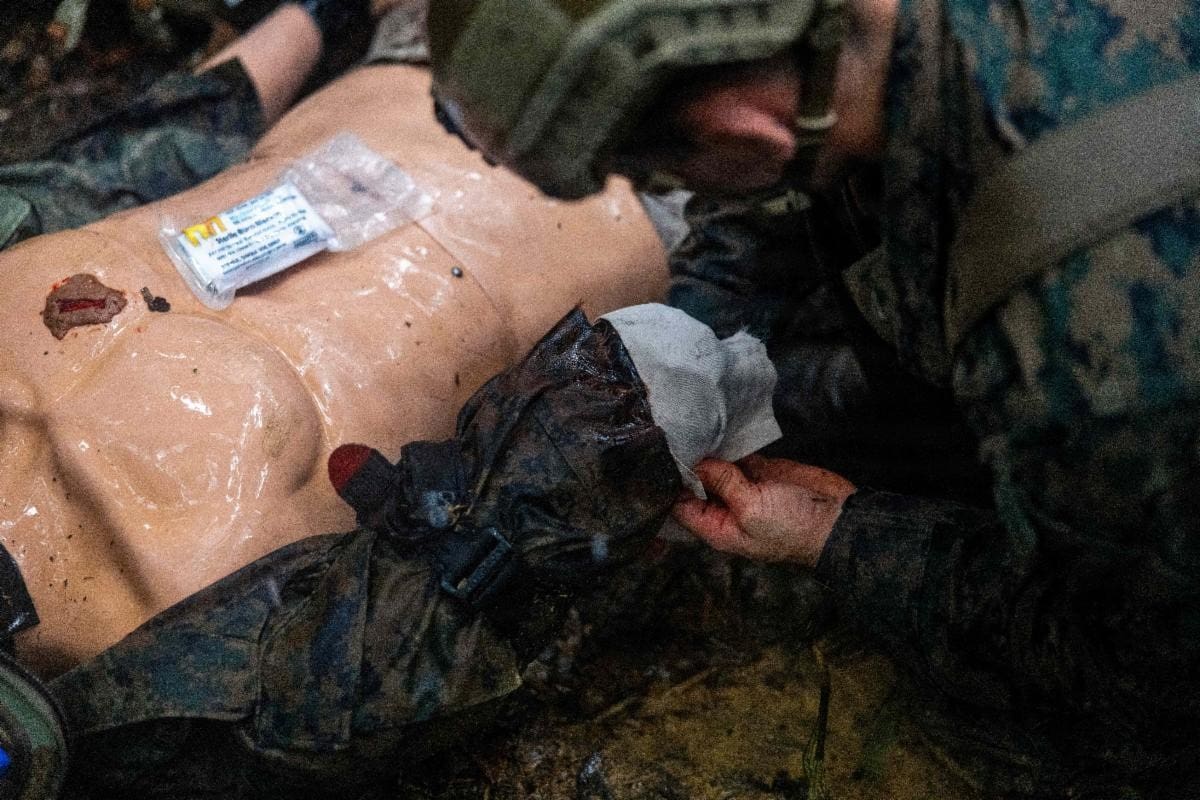 ‘WELL BEYOND’: The recently passed One Big Beautiful Bill included funding for military research into advanced medical technologies to address combat injuries, and SMI’s life sciences team is working closely with clients on the resulting opportunities.
The Defense Advanced Research Projects Agency’s Biological Technologies Office recently published a request for information seeking transformative “medical sensing, computational, modeling, actuation, therapeutic, and robotics technologies.”
‘Guide and shape’: “DARPA received $100 million for combat casualty care in the reconciliation bill,” said SMI VP Dr. Travis Taylor. “So this RFI will help guide and shape that opportunity.”
Read more: DARPA Seeks Info on Advanced Medical Technologies for Battlefield Care
Deadline: Responses are due by December 4.
NEW RULES: Taylor also flagged new guidance from the National Institutes of Health on terminating grants, as expected by a recent executive order on federal grantmaking.
What it means: “If the NIH doesn’t think an award aligns with the administration’s priorities, it can be terminated,” Taylor said. The new terms are retroactive to October 1, 2025.
It goes “well beyond the typical life sciences and medical topics,” Taylor added, including artificial intelligence and machine learning applications.
CLIENTS IN THE NEWS
Battery maker Factorial has left its Methuen factory. Another Mass. company will move in


