


Welcome to A Capitol View!
Congress is back and begun a mad dash to finalize appropriations bills for Fiscal 2026 before a temporary spending measure expires on January 30.
The legislative gears appear to be moving again following the historic government shutdown in late 2025. Progress began in late December with bipartisan passage of FY26 National Defense Authorization Act, which sets policy for the Department of War.
Meanwhile, appropriations committee leaders also announced an agreement on funding allocations for nine remaining spending bills in the hopes of avoiding another government shutdown.
“Congress returned from the holidays having passed three of the twelve appropriations bills and a deadline of January 30 before the continuing resolutions run out,” said SMI VP David Bortnick, explaining that appropriators are planning to move three “minibus” spending packages.
First up is a “minibus” appropriations package unveiled by House and Senate leaders on January 5 that includes spending bills for Commerce, Justice, and Science, Energy and Water Development, and Interior and Environment,including nearly $25 billion for NASA. The package passed the House on January 8 and now heads to the Senate.
That is expected to be followed by a spending package for Homeland Security, State and Foreign Operations, and Financial Services, followed by another measure combining Defense, Labor and Health, Education, and Transportation and Housing.
House Appropriations Committee Chair Rep. Tom Cole also telegraphed that the Pentagon will ultimately get more funding than what the White House requested, including slightly exceeding the levels authorized by the NDAA.
Fingers crossed: There is still the potentilal for some of the the spending bills to be derailed and require another temporary spending measure to avoid a partial shutdown, including over growing opposition to the recent U.S. military attack on Venezuela and the Administration’s unpopular crackdown on immigration.
The Committee for a Responsible Budget has published a useful primer on the status of funding measures for specific federal agencies.
Missing link: We’re also engaging with Congress to ensure upcoming spending measures include an extension of the Small Business Innovation Research (SBIR) and Small Business Technology Transfer (STTR) programs, which lapsed on Oct. 1.
The multi-billion funding stream is leveraged by nearly a dozen federal agencies to develop new technologies. Pentagon officials in particular have been sounding the alarm and pressure is mounting for congressional negotiators to find common ground to reauthorize the awards.
Expected to be released this month is a study of SBIR and the Department of War by the National Academies of Sciences, Engineering, and Medicine. The analysis, which was requested by Congress, is intended to help inform the negotiations.
Keep up with developments from DefendSBIR, the coalition of small businesses and universities SMI is supporting.
Go deeper: $900 Billion NDAA: What Is In, What Was Left Out of Major Defense Bill
And: Here are key acquisition reforms dropped from the 2026 NDAA
Plus: 2025 The Pivotal Year for Defense Acquisition
SMI SPOTLIGHT
SMI continues to enlist top policy and technical specialists as we offer clients a sharper set of lobbying, federal marketing, and strategic communications services. We are thrilled to announce two recent additions to our roster of senior advisors to support clients in shaping and executing their federal strategies:
 Retired Air Force Lieutenant General Eric Fick is former Program Executive Officer and Director for the F-35 Lightning II Program and Executive Vice President for Federal Programs at Lyten, Inc. and President of Lyten Federal Solutions, Inc.
Over his more than three-decade career, Fick also served in senior posts at the Air Force Research Laboratory and overseeing intelligence, surveillance and reconnaissance, special operations programs, and as a legislation liaison.
 Dr. Jaret Riddick is a leading authority on autonomous systems with nearly two decades of experience shaping defense technology strategy, including as Principal Director for Autonomy in the Office of the Under Secretary of Defense for Research and Engineering.
Dr. Riddick has also held senior posts at the Army Research Laboratory, a series of defense acquisition roles, and as a senior fellow at the Center for Security and Emerging Technology.
We’re also pleased to welcome SMI analyst Sydney Rovner, who brings a background in international relations and climate policy, specializing in trade and sustainable energy technologies and solutions.
Sydney previously worked with the Maritime Innovation Coalition, advancing federal support for fuel and port infrastructure development, and the National Hydropower Association, helping to coordinate policy, regulatory, and legislative priorities.
Last but not least, we closed out 2025 with a series of well-earned promotions for SMI Vice Presidents Rebecca Gansca, Tas Ingram, Chris Michelbacher, Celia Morte, Karlee Popken, and Nick Vance.
Welcome aboard and congrats to all!
TECHNOLOGY
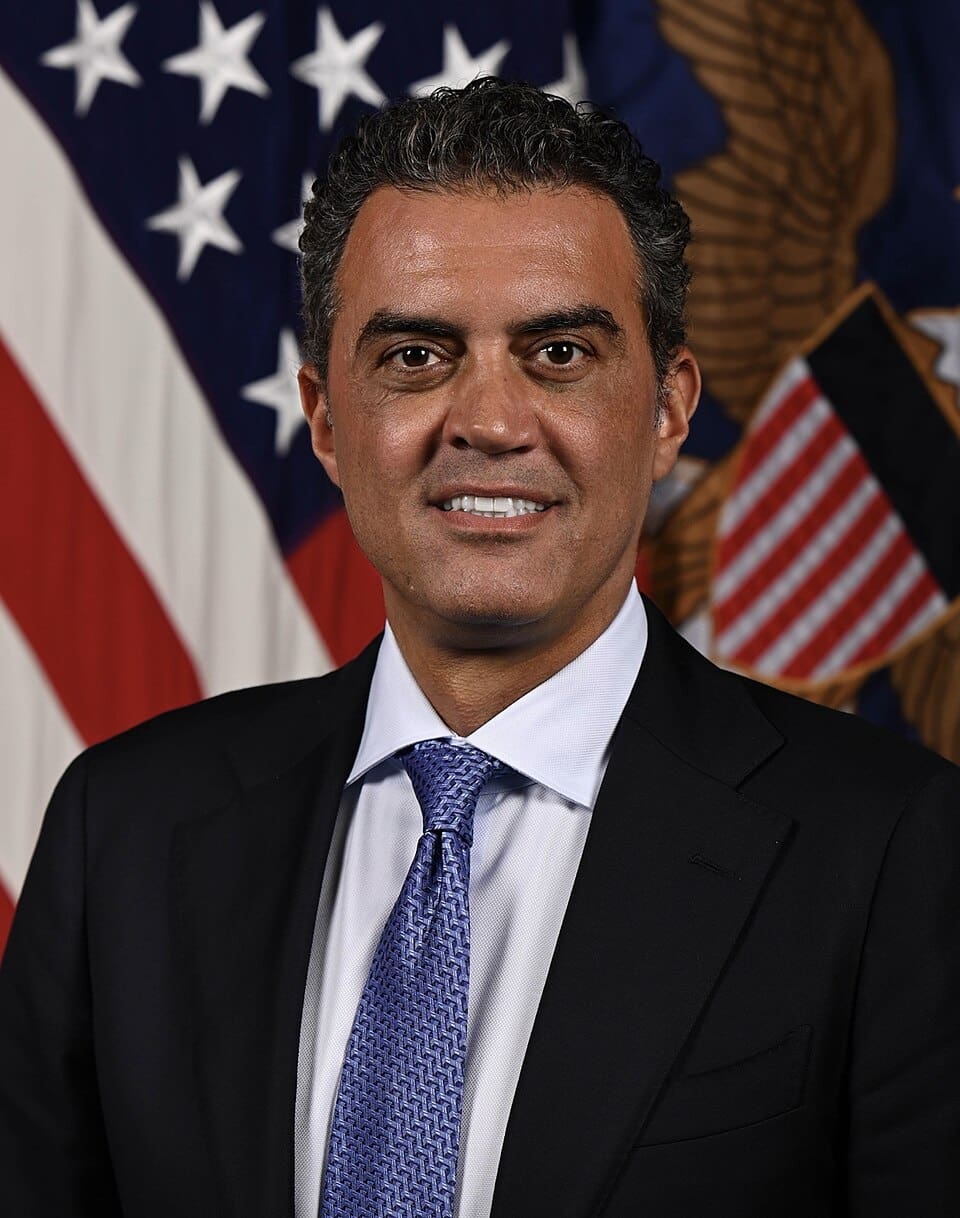 LAB TO LAUNCH: SMI is proud to be partnering with the Office of the Under Secretary of War for Research and Engineering to host an industry day on January 22 to unveil new opportunities to partner with military laboratories to commercialize cutting-edge technology.
“From Lab to Launch: Accelerating Invention Transition to the Warfighter” will kick off a pilot program that will provide no-fee commercial evaluation licenses (CEL), allowing industry to assess the technical, market, and business potential of Department of War patents, along with associated scale-up challenges.
This “patent holiday” offers a unique pathway for DoW to accelerate the commercialization of crucial technologies for the warfighter by providing industry partners with unprecedented access to government intellectual property.
Undersecretary Emil Michael and other leaders will outline the value of IP commercialization, and the event will also include briefings from the Office of Technology Transfer, Transition and Commercial Partnerships, a panel of industry leaders, and a showcase of laboratory IP and partnership opportunities.
Please register to attend in person or virtually by January 16.
THE BIG NOT-SO-EASY: Also later this month, SMI COO Ken Wetzel will be the keynote speaker at the annual Composites, Materials & Structures Conference, the preeeminent gathering foucsed on advances in materials that are designed for the harshest environments on Earth and in space.
The five-day conference in New Orleans will draw attendees from government, industry, and academia that are developing thermal protection materials, ceramic matrix composites, carbon-carbon materials, ballistic technologies, hypersonics, and gas turbine engines.
MANUFACTURING
RADICAL IDEAS’: Are you sitting on the next breakthrough in manufacturing — in defense, energy, biotech, nanotechnology, textiles, or agriculture?
 SME, the Society of Manufacturing Engineers, is looking to help fund radical new ideas, whether you are an established leader in manufacturing, a startup, a university research lab, or tinkering in your garage.
SMI’s strategic communications practice is pleased to be supporting SME’s annual Blue Sky Competition, which has propelled breakthroughs ranging from 3D bioprinting of human tissue in the operating room to designing “factories in space” and reimagining the AI-human interface to detect worker stress and fatigue.
“For nearly a decade, the Blue Sky Competition has nurtured some of the most radical ideas for taking American manufacturing to the next level and helped transition and scale them across industries,” said SME Chief Manufacturing Officer Brett Conner.
Submissions are now open. Spread the word and get those abstracts in by April!
 FULL STEAM AHEAD: SMI is proud to support Fincantieri Marine Group as it plays a leading role building a maritime industry coalition to strengthen shipbuilding and related manufacturing sectors in the Great Lakes region, including the establishment of federally-designated Maritime Prosperity Zones.
“Commercial and military shipbuilding is a bipartisan issue, and the Great Lakes region has the talent and manufacturing chops to immediately play a bigger role in advancing the maritime national security and economic goals shared by the Trump Administration and Congress,” said SMI Senior Vice President Jeremy Steslicki,who leads the firm’s Shipbuilding and Naval Research Practice.
‘Well positioned’: A bipartisan group of senators recently wrote to President Trump in support of Great Lakes shipbuilding.
“We share your goal of a revitalized shipbuilding and maritime manufacturing industry and believe that the hardworking people and dynamic economies of the Great Lakes region will be essential to achieving it,” the senators wrote “The Great Lakes are already home to shipbuilders, manufacturers, steel producers, casting and forging, and maritime industry suppliers. In many ways, the Great Lakes states are well positioned for sustained national investment that would build on the current shipbuilding and manufacturing capacity in the region.”
The letter aligns with Trump’s April executive order, “Restoring America’s Maritime Dominance,” which required the United States Department of War and other federal agencies to develop a maritime action plan that includes new prosperity zones, including in regions outside traditional coastal shipbuilding centers.
“Shipyards, steel producers, and manufacturing suppliers in Michigan, Wisconsin, Ohio, and Indiana have the capacity and workforce to build Navy and Coast Guard vessels, icebreakers, commercial ferries, and maritime security craft,” the senators wrote.
The letter also calls on Congress and the Administration to double down on workforce training and education, noting that “a robust pipeline of skilled workers is essential to meet current and future demand.”
Read more: Eight U.S. Senators call on Trump to establish Great Lakes shipbuilding Maritime Prosperity Zones
POLICY UPDATE
 ‘GREATEST IMPACT’: The Trump Administration recently issued a series of strategy and policy documents that will shape investments in the months and years ahead.
The Department of War published a revised list ofcritical technology areas that “represent the priorities that will deliver the greatest impact, the fastest results and the most decisive advantage on the battlefield,” said Undersecretary Michael.
The focus areas include applied artificial intelligence, biomanufacturing, contested logistics technologies, quantum and battlefield information dominance, scaled directed energy, and scaled hypersonics.
Hear directly from Secretary Michael on the pared down tech priorities.
‘Nanational mobilization’: The President also issued a new National Security Strategy that calls for “a national mobilization to innovate powerful defenses at low cost, to produce the most capable and modern systems and munitions at scale, and to re-shore our defense industrial supply chains.”
“The United States must at the same time invest in research to preserve and advance our advantage in cutting-edge military and dual-use technology, with emphasis on the domains where U.S. advantages are strongest,” the strategy states. “These include undersea, space, and nuclear, as well as others that will decide the future of military power, such as AI, quantum computing, and autonomous systems, plus the energy necessary to fuel these domains.”
In the beginning: The Department of Energy also announced it will invest $320 million in advancing its Genesis Mission, which is intended to leverage automation and AI, supercomputers, robotics, and experimental facilities “to double the productivity and impact of American research and innovation within a decade.”
In the executive order launching the initiative, the White House highlighted as priority areas advanced manufacturing, biotechnology, critical materials, nuclear fission and fusion energy, quantum information science, and semiconductors and microelectronics. The new funding initiative aligns with a September memo from the White House Office of Management and Budget laying out the research and development budget priorities for Fiscal 2027.
SMI IN THE NEWS
 SMI’s deep bench of technical and policy experts are in greater demand from news organizations and industry publications to help decipher the federal landscape and illuminate solutions to a host of challenges.
Here are some recent commentaries by SMI experts and media coverage:
To Win the Future, U.S. Must Win Materials Race
How To Break China’s Grip on the Batteries Powering Our Military
How U.S. Defense Industry Dodged a Rare-Earth Shortage After China’s Curbs
The Pentagon and A.I. Giants Have a Weakness. Both Need China’s Batteries, Badly.
CLIENTS IN THE NEWS
Salvaging Critical Minerals From Old Laptops and Phones Isn’t So Easy
Honda and Princeton NuEnergy Sign MOU to Advance Collaboration in Next-Generation Battery Recycling Technologies
Defense tech firm plans to double local staff in move to the Strip District
Inside New Balance’s Mission to Invest in Made-in-America Production
READING ROOM
Viewpoint: Reforms to Navy’s research office must come without sacrificing scientific freedom
Nuclear Power: Nuclear Regulatory Commission Approved 13 Reactor Licence Renewals in 2025
Defense Spending: Trump calls for record $1.5 trillion defense budget, a 50 percent jump
Defense Industry: Trump threatens to cut Raytheon’s government contract
From the Pentagon: Annual Report to Congress: Military and Security Developments Involving the People’s Republic of China
From the White House: Prioritzing the Warfighter in Defense Contracting
From Capitol Hill: Rep. Ken Calvert: How to maximize American manufacturing capacity
Please follow us on social media to keep up to date on our latest activity.